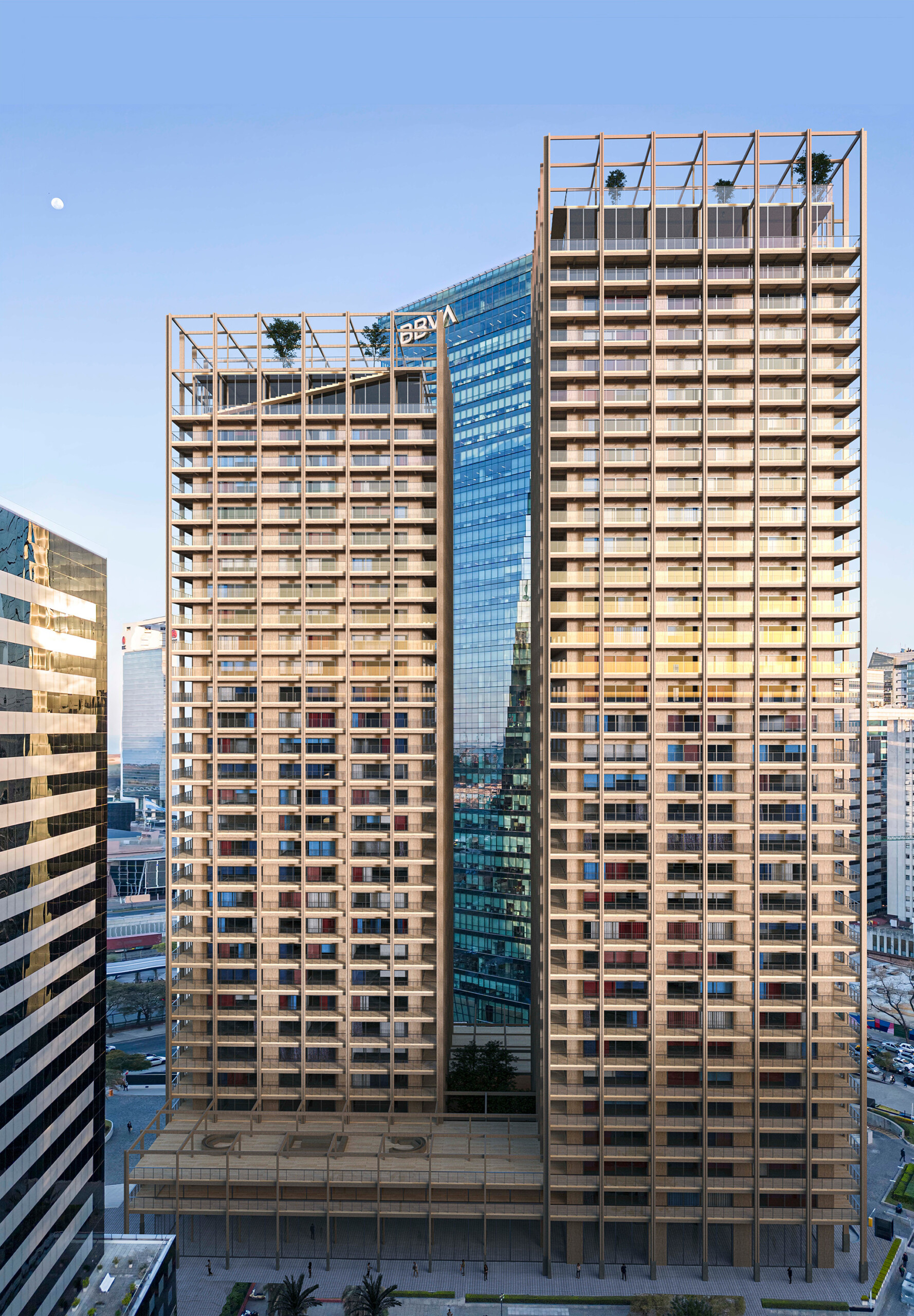
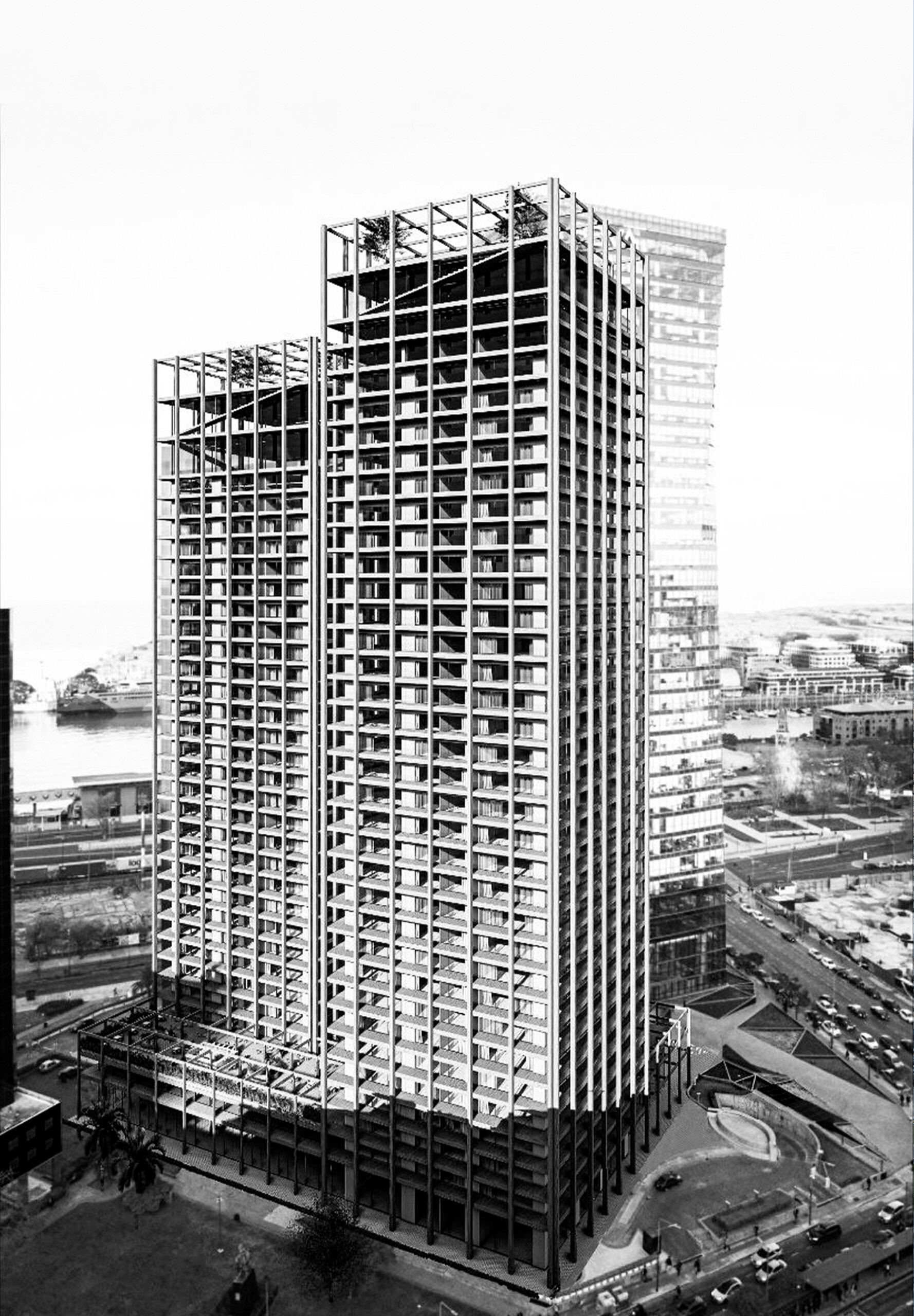
Developed within Tesis Proyectual I–II at the Escuela de Arquitectura y Estudios Urbanos, Universidad Torcuato Di Tella, this project proposes the adaptive reuse and reorganization of the Catalinas and Alem Plaza office towers, located in the southern edge of the Catalinas Norte business district in Buenos Aires. Originally conceived in the 1990s as hermetic, mono-programmatic office buildings, the twin towers exemplify the limitations of zoning-driven corporate architecture, characterized by spatial rigidity, environmental inefficiency, and a lack of engagement with the public realm.
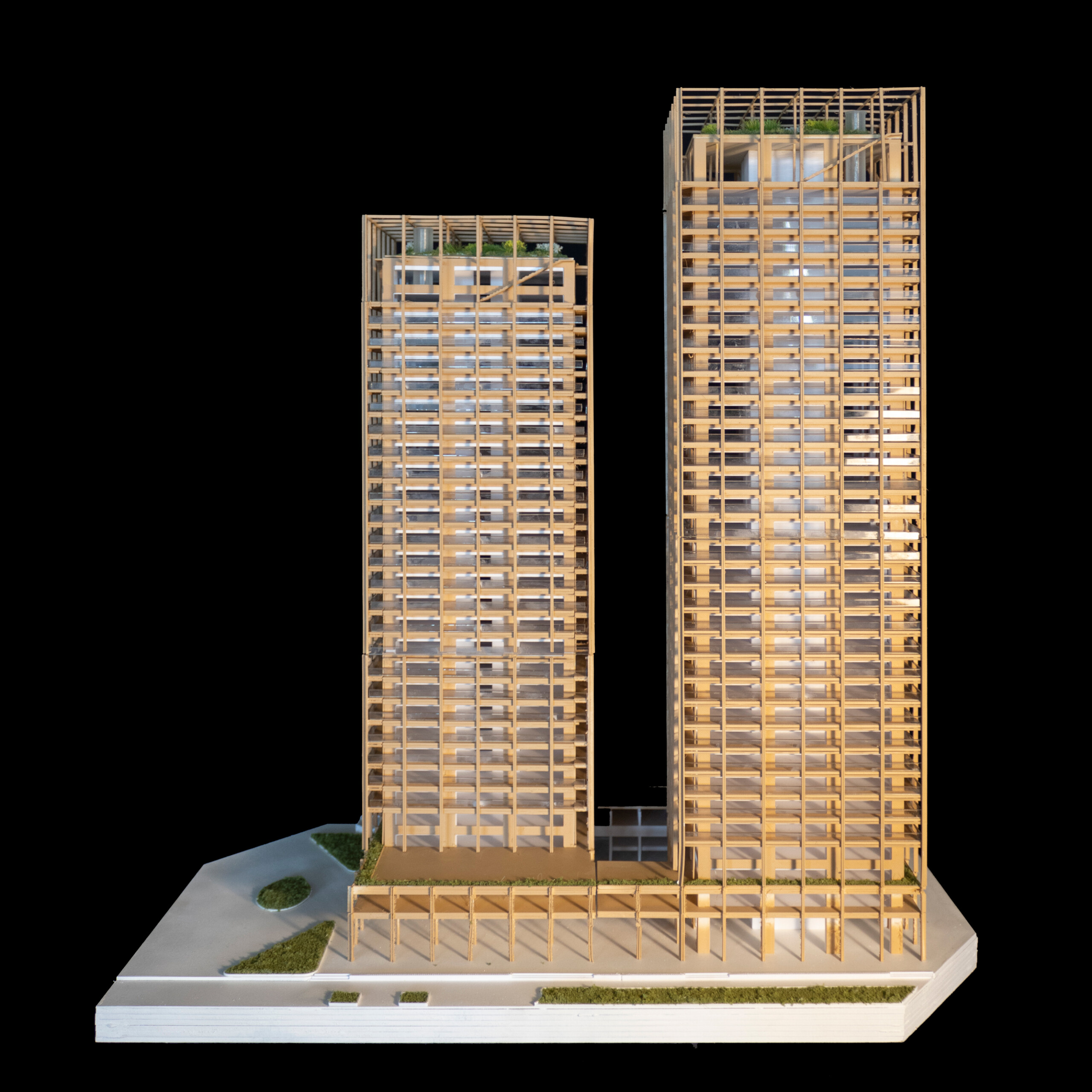
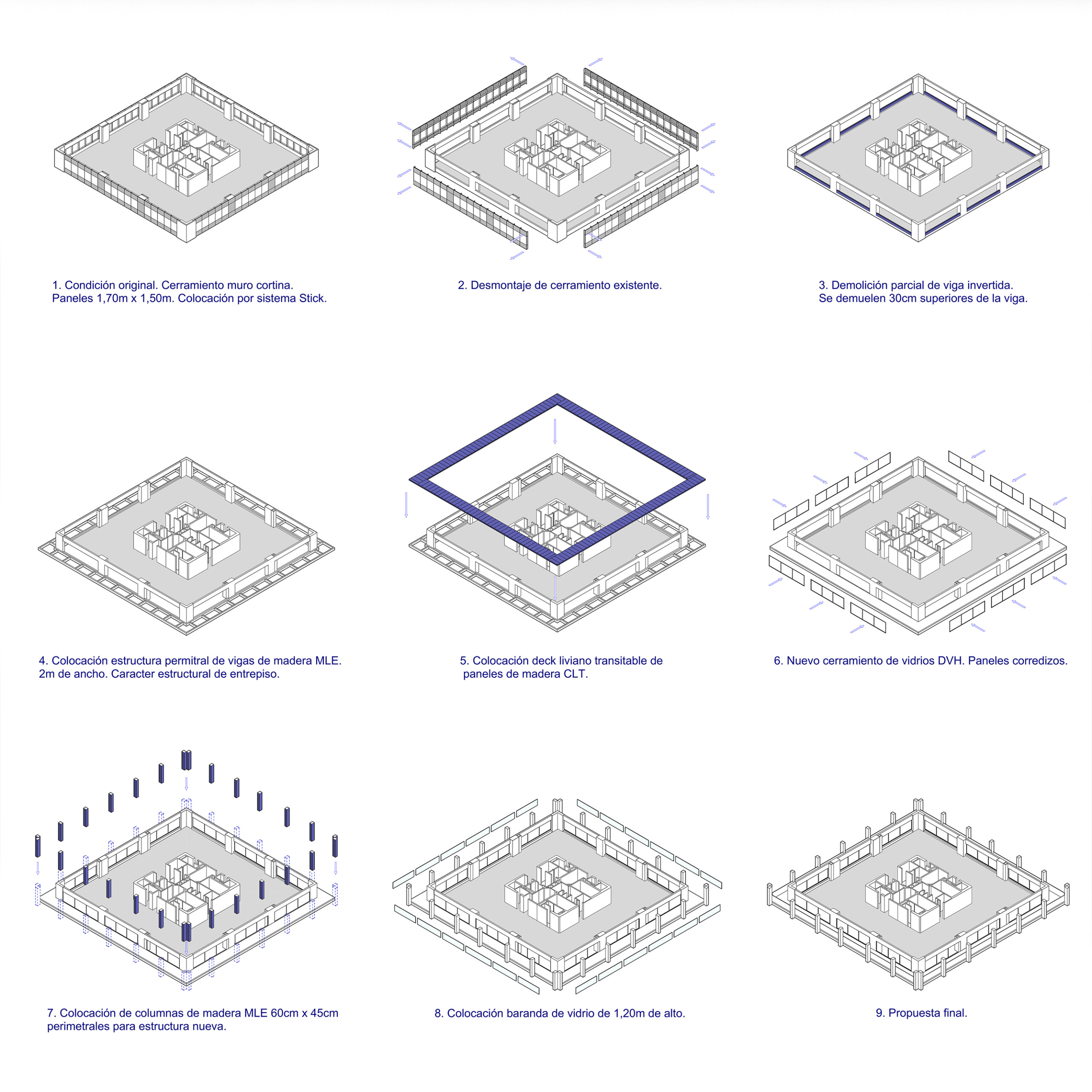
The project employs redescription as a design strategy, drawing on the work of Lacaton & Vassal to reframe the existing structures not as obsolete artifacts, but as latent systems with untapped spatial and material potential. By preserving the original reinforced concrete structural cores, the intervention introduces a new self-supporting perimeter structure that expands the usable floor area, transforms the sealed curtain wall into a permeable envelope, and enables natural light, ventilation, and programmatic flexibility. This structural addition facilitates the transition from a singular office use to a mixed-use configuration, accommodating residential, commercial, and collective programs while maintaining adaptable, open-ended floor plans.
At ground level, the project reconfigures the base of the towers to establish a porous, publicly accessible plinth that reconnects the complex with the surrounding urban fabric. Retail spaces, services, and shared programs are organized around a central courtyard, activating the street edge and addressing the long-standing absence of public life in the area. At the upper levels, the reorganization of technical systems liberates the rooftop, allowing for the creation of a garden terrace that restores the concept of a true free plan.
Through minimal yet strategic architectural interventions, the project demonstrates how existing high-rise office buildings can be transformed into environmentally responsive, socially active, and programmatically resilient urban structures, positioning adaptive reuse as both an architectural and ecological imperative.
Universidad Torcuato Di Tella
Escuela de Arquitectura y Estudios Urbanos
Professor: Marcelo Faiden, Lucas Bruno.
Collaborators: Elena Curdi, Abril Mendez Cuellas, Violeta Mastronardi.